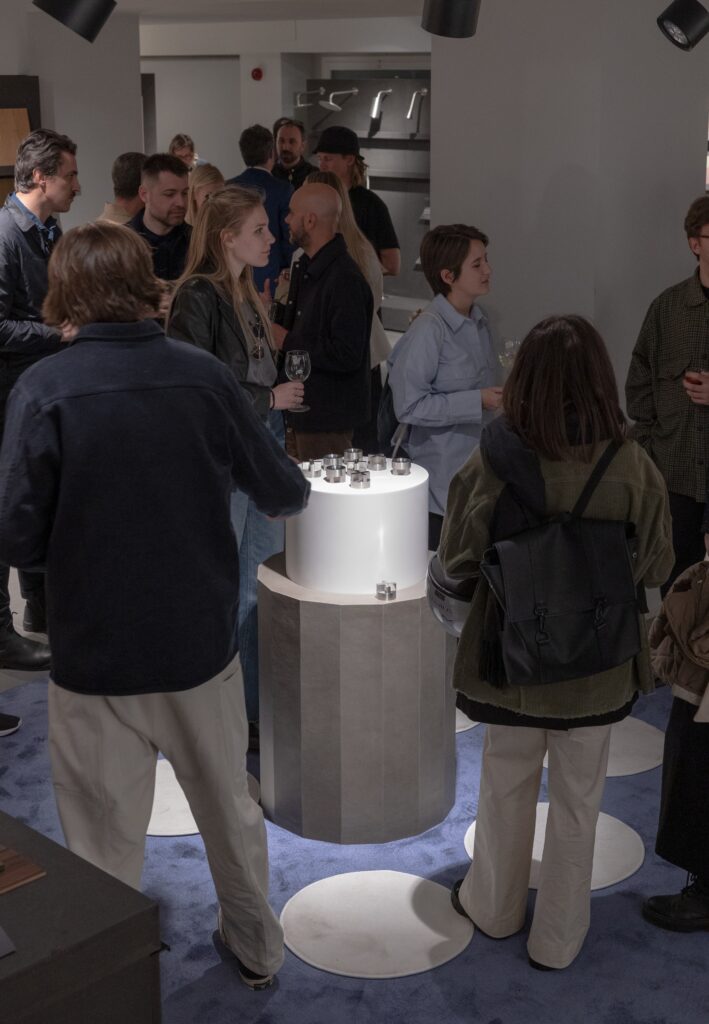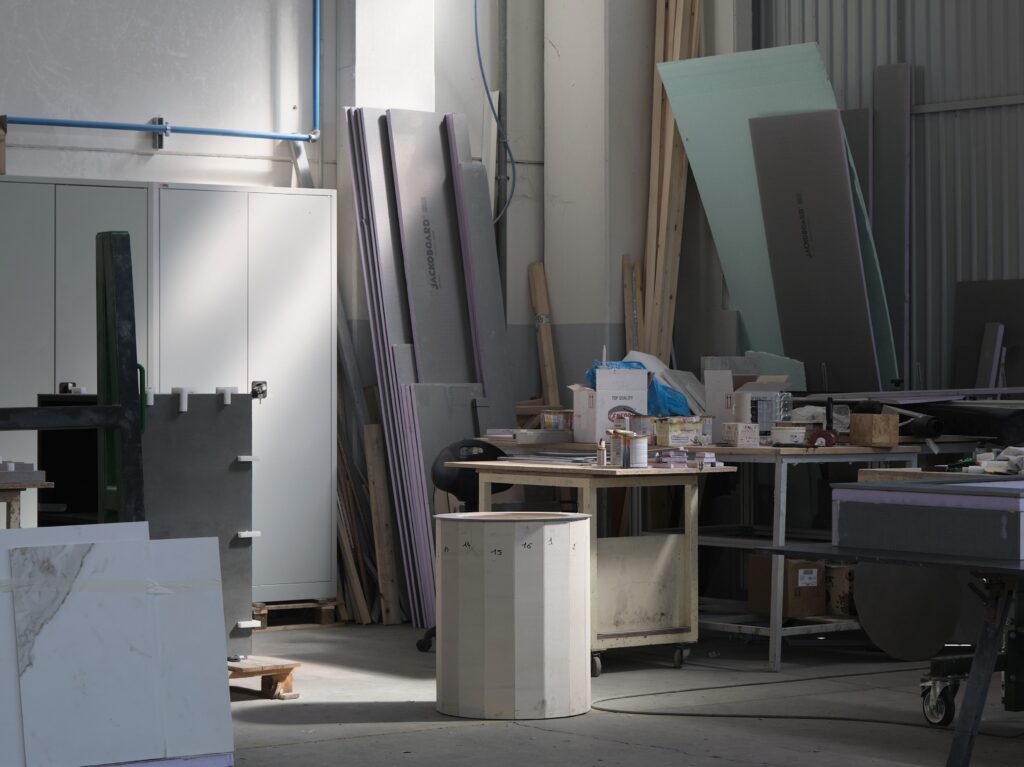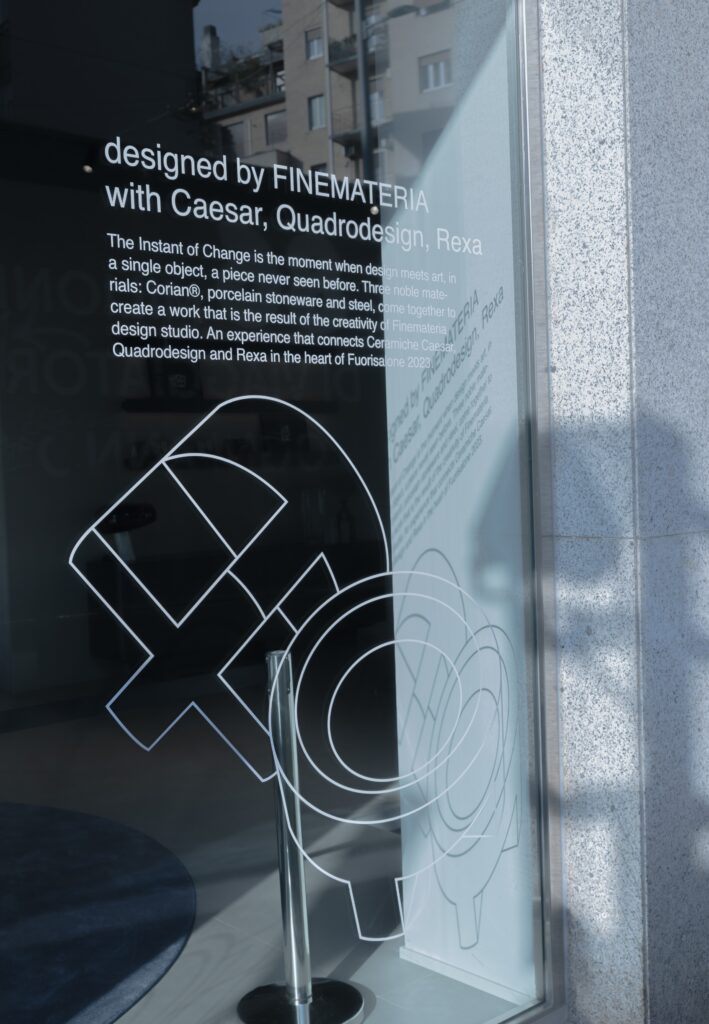
Presented during the Milano Design Week 2023, the third chapter of The Instant of Change marks a decisive shift from the observational dimension of previous editions toward a more explicitly object-oriented exploration. Hosted by Mo.1950 at its Via Molino delle Armi space, the exhibition—curated by Luca A. Caizzi—invites the experimental practice of Finemateria to engage directly with the language of materials through the construction of a singular artefact.
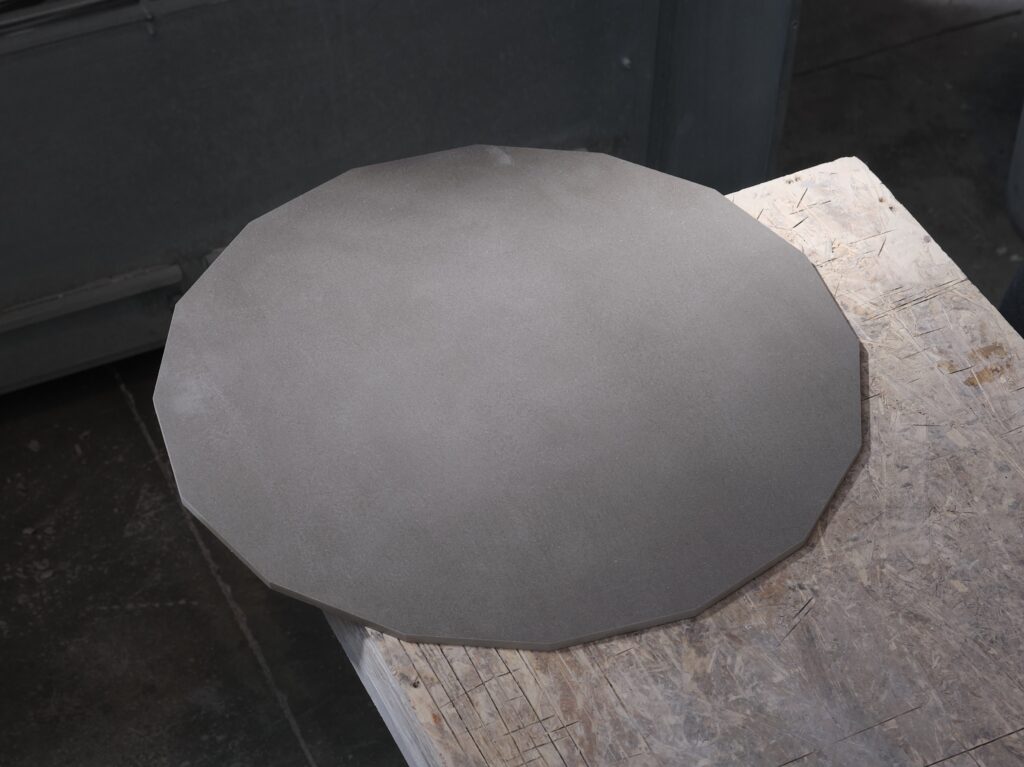
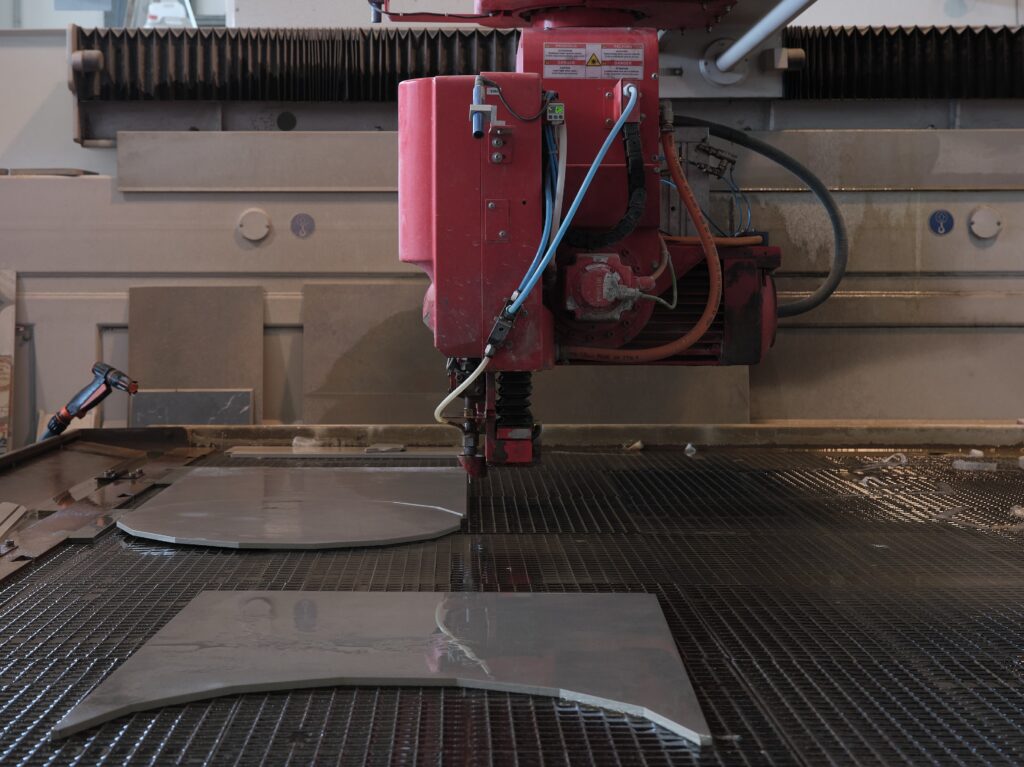
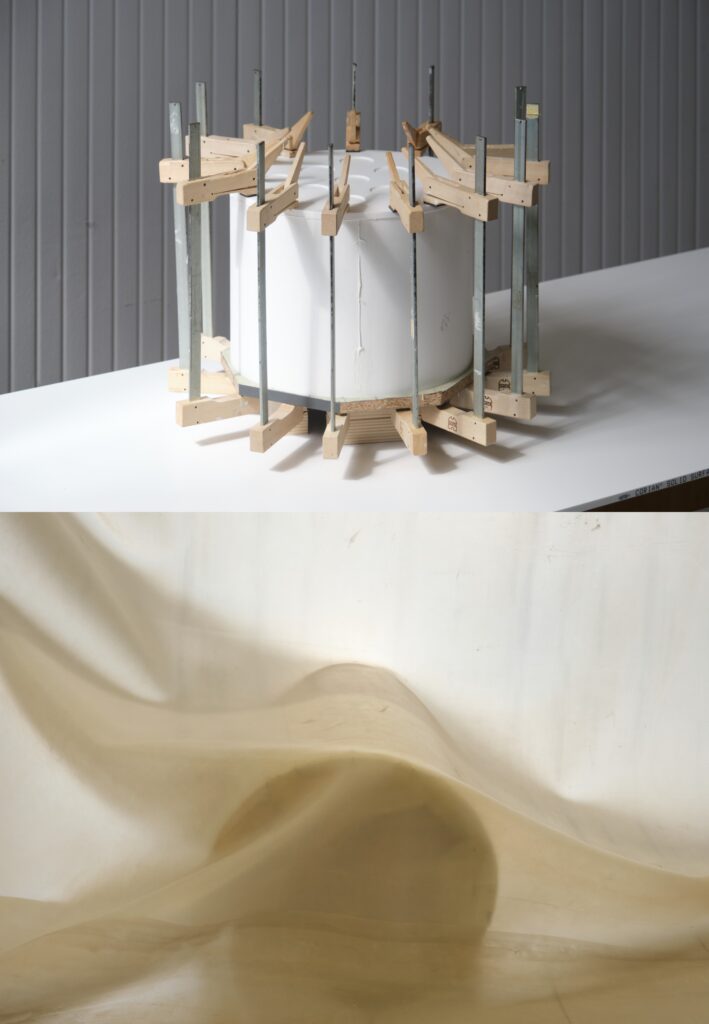
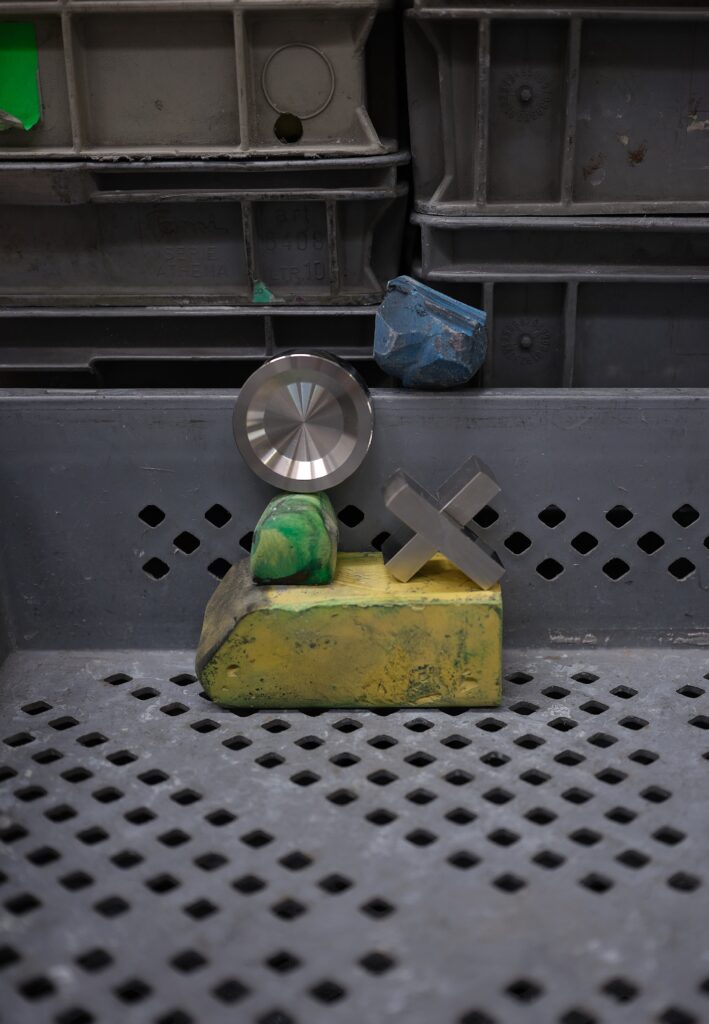
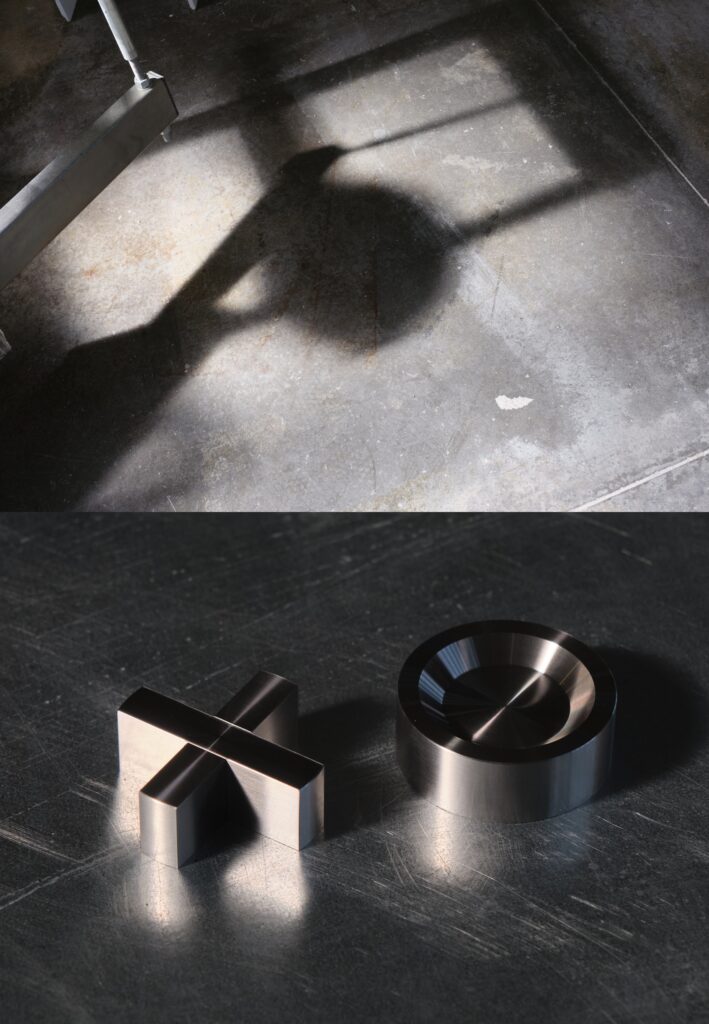
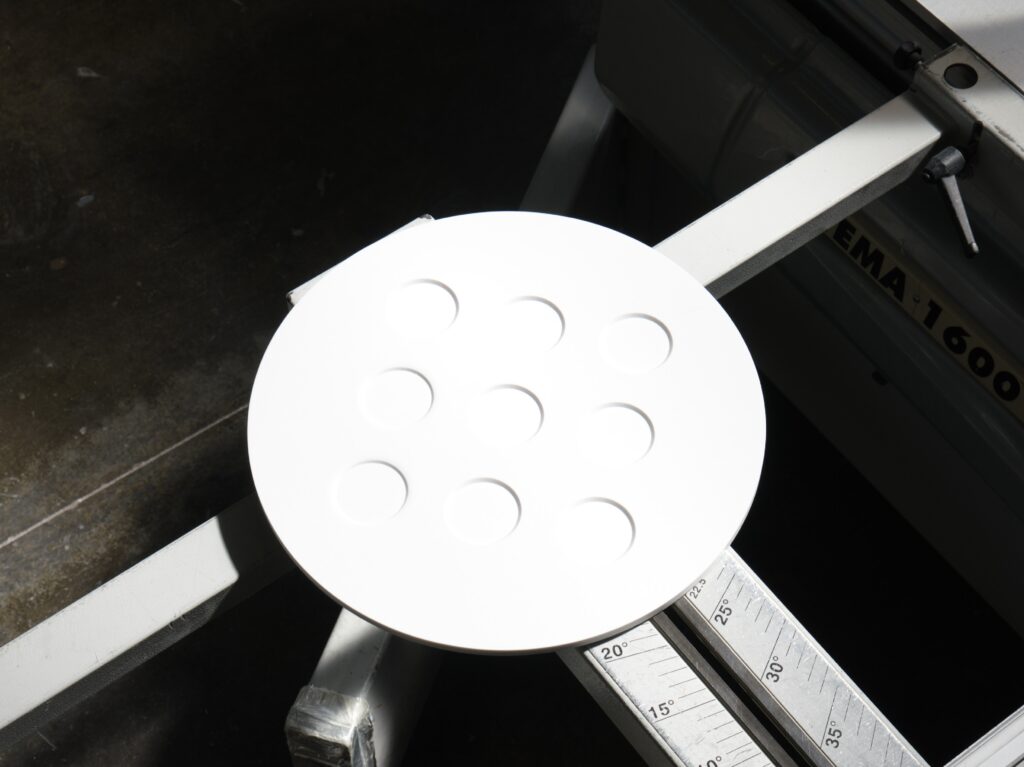
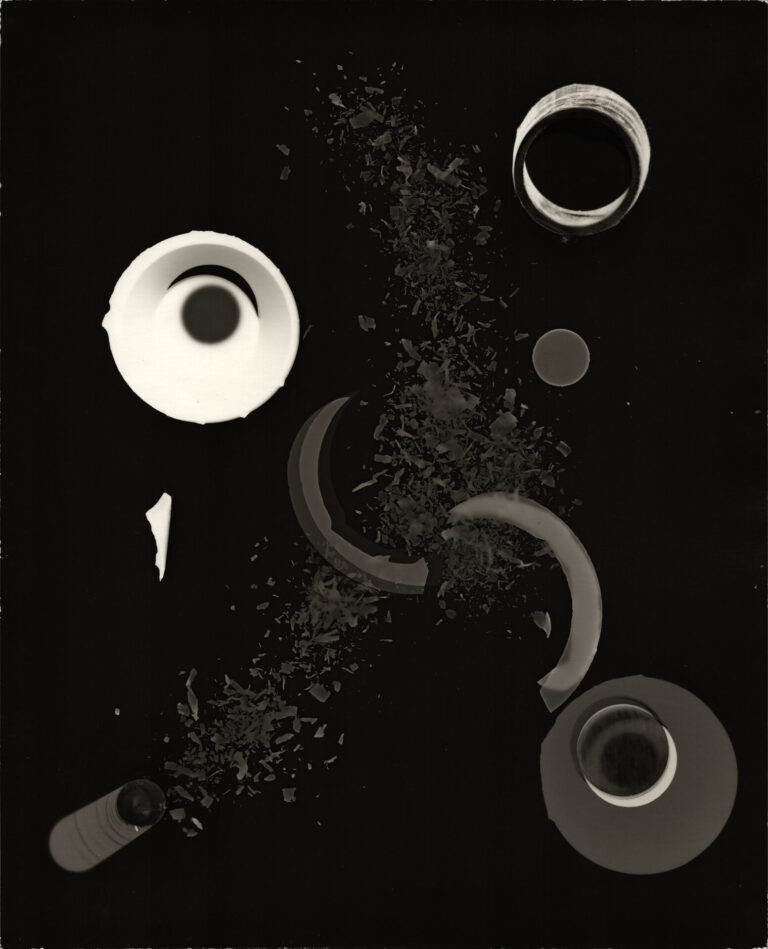
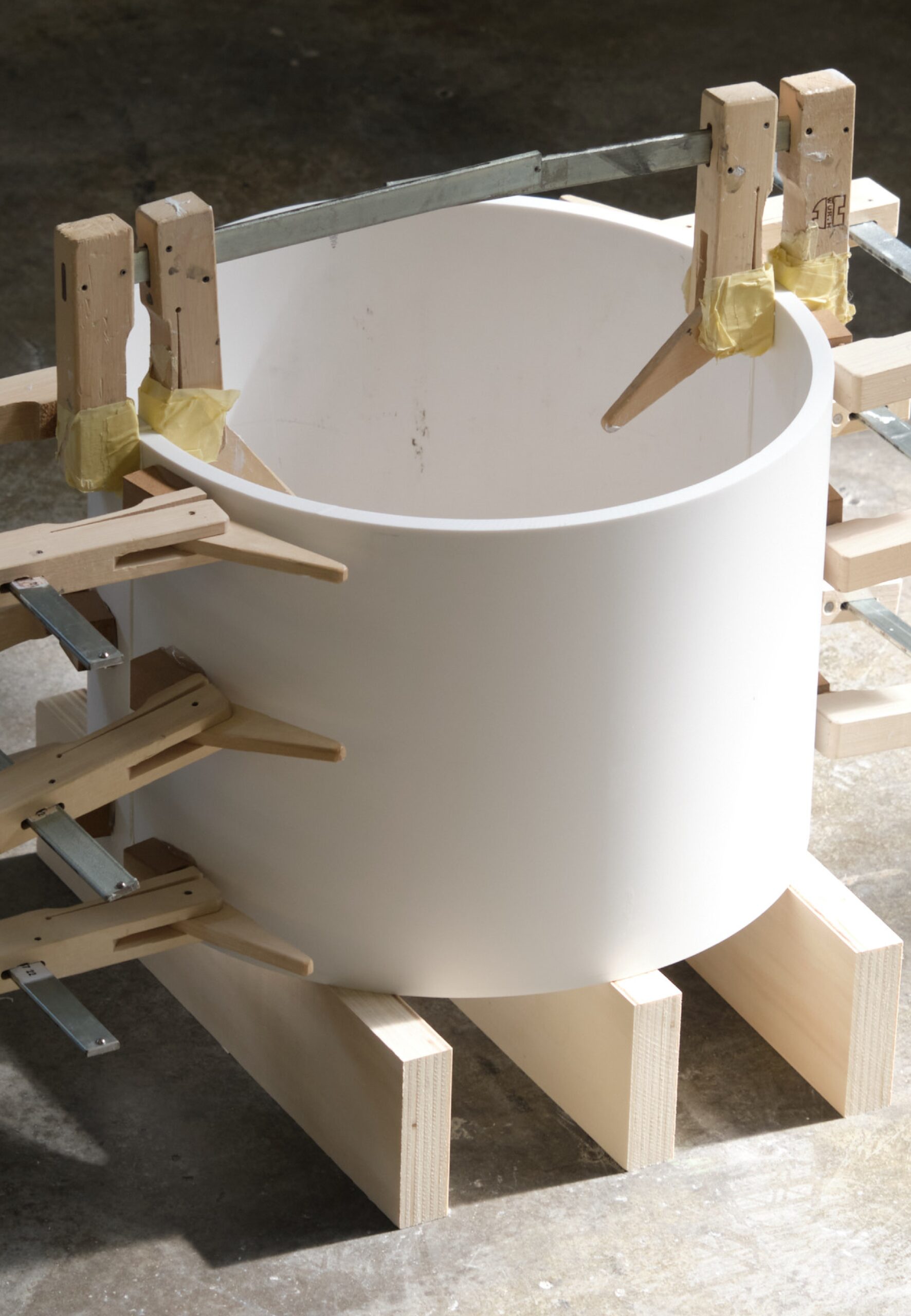
At the center of the project is Tris, a sculptural object that functions simultaneously as a design piece and as a relational device. Conceived as a point of convergence between three distinct material identities—porcelain stoneware, Corian®, and steel—the work establishes a condition of coexistence rather than hierarchy. Each material retains its intrinsic properties while participating in a broader compositional system, generating a dialogue that is at once formal, tactile, and conceptual.
The collaboration with Ceramiche Caesar, Quadrodesign, and Rexa becomes the operative framework through which this dialogue takes shape. Rather than being presented as discrete industrial outputs, the materials are recontextualized within a shared object, their boundaries softened through proximity and interaction. The result is an open-ended composition, where contrast—between opacity and reflectivity, density and smoothness—does not resolve into synthesis but remains active, perceptible.
In this iteration, transformation is no longer confined to the mutability of matter itself but extends to the ways in which matter is encountered. Tris invites direct engagement: it is meant to be touched, activated, experienced through the body. The viewer is no longer positioned as a distant observer but becomes a participant in a network of interactions that includes both the object and other visitors. As Caizzi notes, when design intersects with art, an idea acquires volume—becoming something that can be handled, shared, and negotiated.
This emphasis on tactility introduces a social dimension to the project. Materials do not only meet within the object; they mediate encounters between people. The surface becomes interface, the object a catalyst for proximity. In this sense, The Instant of Change evolves into a platform where transformation is understood not only as a physical process but as a relational condition—one that unfolds between materials, bodies, and gestures.
Within the spatial continuity of Mo.1950’s showroom, Tris operates as both focal point and connective tissue, linking the research trajectories of the participating brands into a single, coherent statement. The installation thus reinforces the project’s ongoing inquiry: that change is not an isolated event, but a continuous negotiation—between substances, disciplines, and forms of experience.