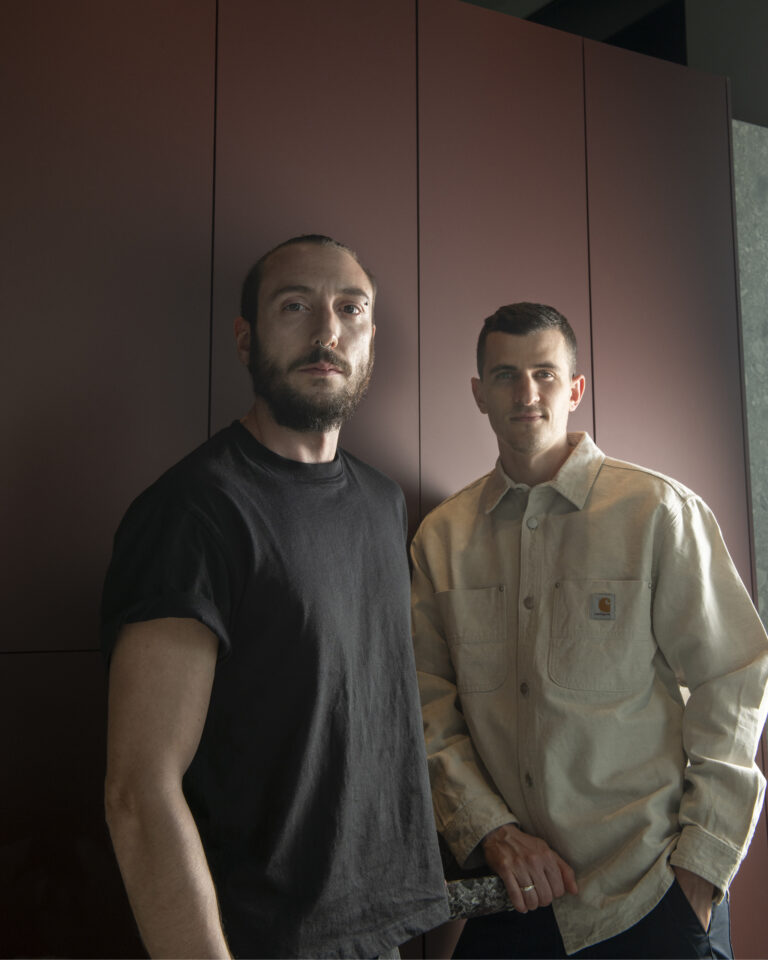
How did your relationship with Mo.1950 begin and evolve, and how did this collaboration lead to your appointment as the brand’s Art Directors?
Our first meeting with Corrado Molteni, CEO of Mo.1950, dates back around eight years. At the time, we were evaluating the introduction of an upholstered furniture brand into the showroom on Via Carducci. From that moment on, our dialogue gradually evolved into an increasingly structured collaboration. Project after project, we eventually conceived together the first Mo.1950-branded space on Via Molino delle Armi, which also includes a materials library.
Our recent appointment as Art Directors is a natural extension of both our professional and personal relationship. It is part of a new strategic vision envisioned by Corrado: a system of exchanges and connections between the company’s partner brands, alongside the arrival of Jessica Soffiati to lead Marketing and Communication with an authorial approach to storytelling and visual content.
This new challenge is about bringing Mo.1950’s identity to the forefront. For years, the company has quietly been one of the key players in Milan’s furniture and design scene, and our goal is to make that spirit visible and meaningful through a coherent creative direction.
In your design approach, what role do courage and personality play? How do these qualities translate into products for a brand?
Our approach is rooted in interdisciplinary cross-pollination because we believe it brings real value to every project. Art, architecture, photography, and design coexist within a holistic vision that seeks to reflect the complexity of our time and respond to meaningful questions.
We consciously keep our own personality in check it should never dominate the design process. Instead, it emerges through our relationships with clients, our ability to listen, and the way we interpret the identity of the companies we work with, rather than through self-referential stylistic exercises.
Courage, on the other hand, is more unpredictable. It doesn’t always pay off immediately. Many companies are understandably reluctant to step outside their comfort zone, so some of our boldest ideas remain in a drawer for years, waiting until the right moment arrives. That’s simply part of the process.
What value does time hold in contemporary design? When designing, do you think more about creating products that can stand the test of time, or about responding to the pace of today's production?
The present undoubtedly plays a fundamental role in the way we understand design today. In recent years, we have witnessed a shift towards functional design capable of adapting living spaces to rapidly changing lifestyles and new needs. As society evolves, so does our profession.
At the same time, the ambition to create timeless products, objects that remain relevant and contemporary over the years, is always part of our design process. It reflects a conscious and responsible approach to our work.
This balance between contemporaneity and longevity is also reflected in our international collaborations. Working with companies across very different cultural contexts, from the Middle East to East Asia and Northern Europe, requires a deeper level of sensitivity, with projects that respect and interpret local cultures and ways of living. In many ways, this too is a dialogue with time.
If you were to imagine a capsule collection for Mo.1950, what role would craftsmanship play? And how would it integrate with the brand's contemporary language?
The idea of a capsule collection under the Mo.1950 brand is something we are currently exploring, and craftsmanship, together with a high degree of customization, would play a central role.
There are several makers and workshops we would like to involve, whom we like to describe, somewhat paradoxically, as representatives of “technological craftsmanship”: a new generation of artisans who embody the spirit of craft within an industrial landscape increasingly driven by technological innovation.
Corrado Molteni has established Mo.1950 as a point of reference for professionals who approach every project with meticulous attention to detail. Building upon the company’s longstanding expertise in bespoke solutions, it would be exciting to offer architects and designers highly customizable products developed through the growing know-how of a flexible artisanal production network.
In recent years, interest in collectible design has grown significantly. How does the culture of the unique piece influence the desires of private clients today? And how does this trend affect your own design choices?
For us, design has always been about creating objects that are useful, functional, aesthetically meaningful, and valuable because of the role they play in everyday life. We believe design should ultimately serve people, focusing on the relationship between an object and its user.
With that in mind, collecting is traditionally associated with art and with unique or limited-edition pieces. By definition, it implies rarity, scarcity, and often exclusivity, making it accessible to a relatively small audience. There is nothing inherently wrong with that, of course, but it represents a philosophy of design that is quite different from our own aspirations and way of thinking.
Is there an object you've been wanting to design for a long time but haven't yet had the opportunity to produce?
We like to think that we still have many projects ahead of us.
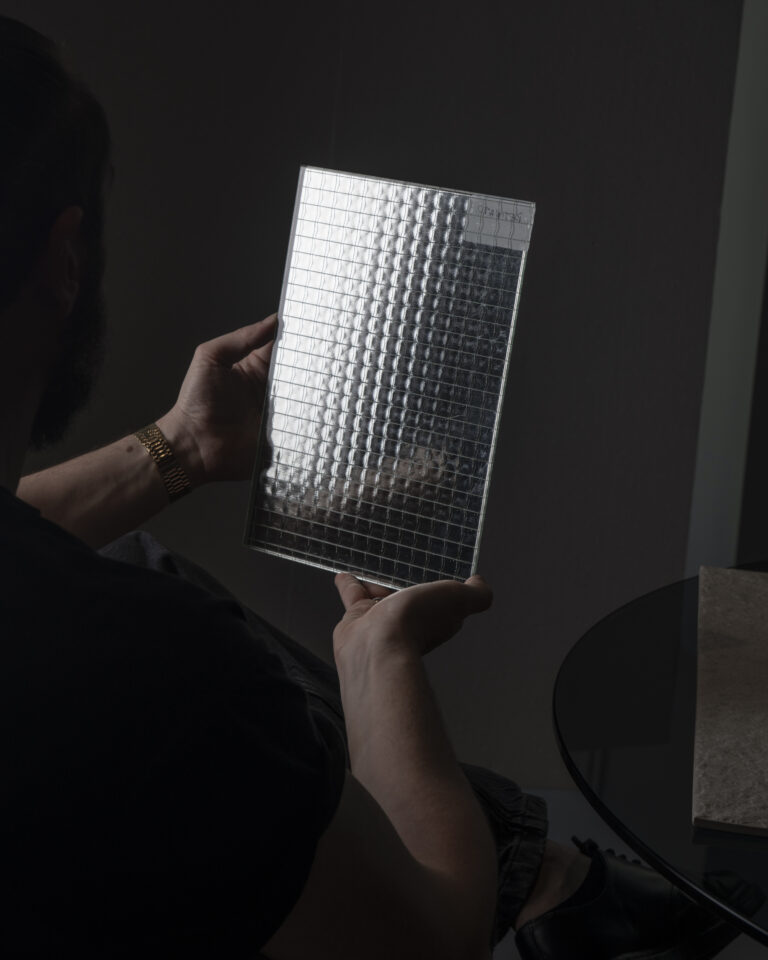
We are particularly fascinated by working with materials, allowing their technical and aesthetic qualities to shape the design itself. At the moment, we are especially drawn to steel—its formal rigor, its timeless character, and its remarkable ability to pair with virtually any other material, almost like a blank canvas.
We believe steel offers the possibility of creating objects with a strong identity and a dual nature: materially and chromatically rigorous, almost technological, yet capable of expressing great sensuality through their forms and through the way they interact with light.