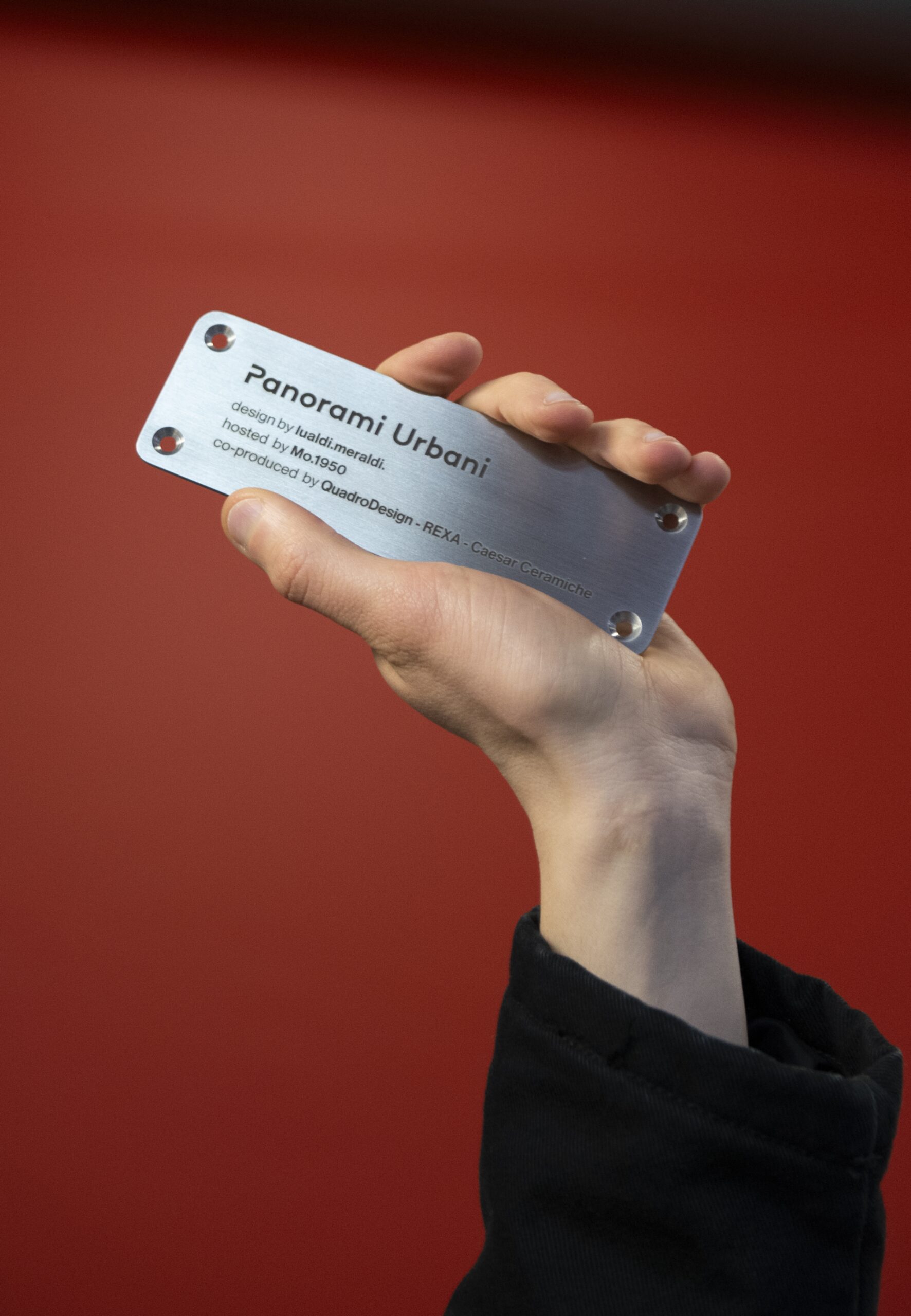
Presented during the Milano Design Week and hosted by Mo.1950, Panorami Urbani transforms the intersection between Via Molino delle Armi and Via della Chiusa into a temporary urban landscape conceived around ideas of collectivity, modularity, and permanence. Developed by LualdiMeraldi Studio in collaboration with Ceramiche Caesar, Quadrodesign, and Rexa, the installation reflects on the civic role of design through a system of temporary public furnishings inspired by the visual and material language of the Milanese underground.
The project draws explicit reference from the legacy of Franco Albini, Franca Helg, and Bob Noorda, whose work for the M1 metro line established a rigorous vocabulary of repetition, clarity, and material consistency. This approach is reinterpreted through contemporary production processes and circular design strategies, generating a series of modular elements—including seating systems, planters, and tables—conceived to foster informal interaction and shared use of public space.
Central to the installation is the principle of Design for Disassembly, which informs both construction logic and environmental approach. Components are designed to be separable, repairable, and reusable, extending the lifecycle of the objects while reducing material waste. Sustainability here is not treated as an abstract value, but embedded directly into the architectural language of the project.
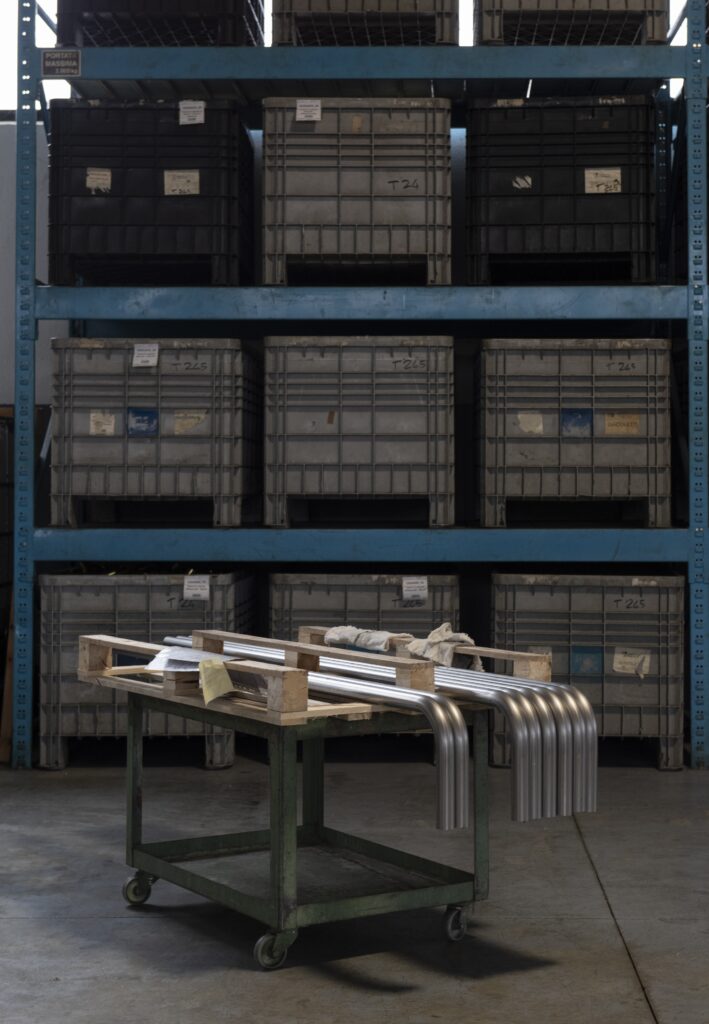
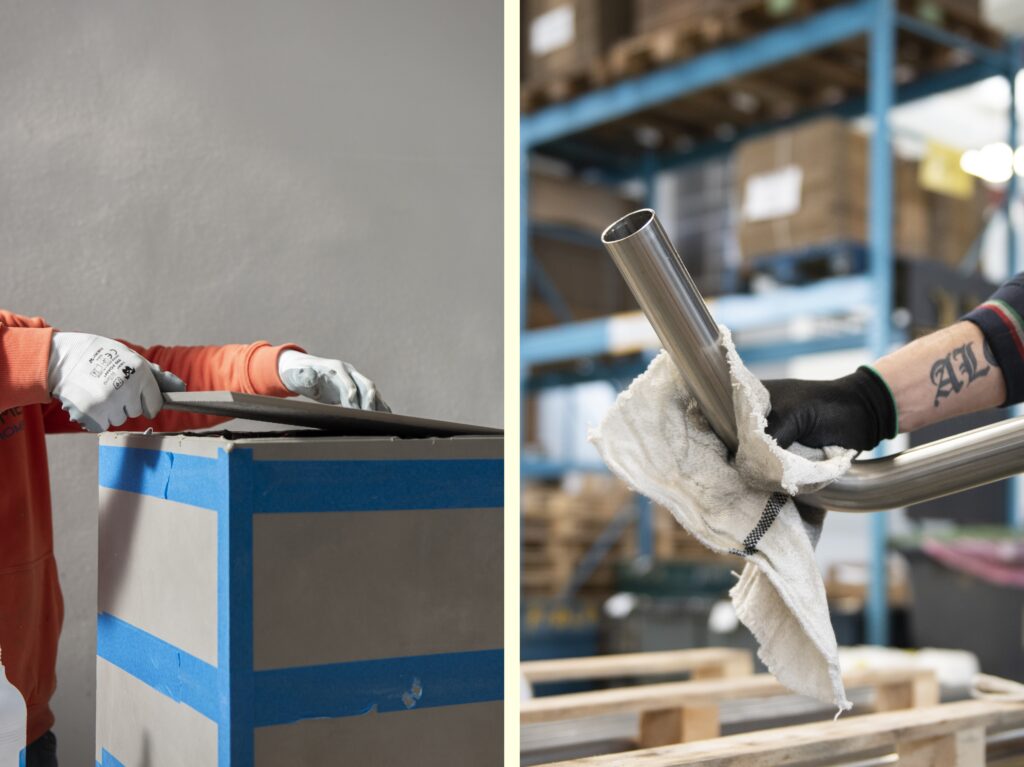
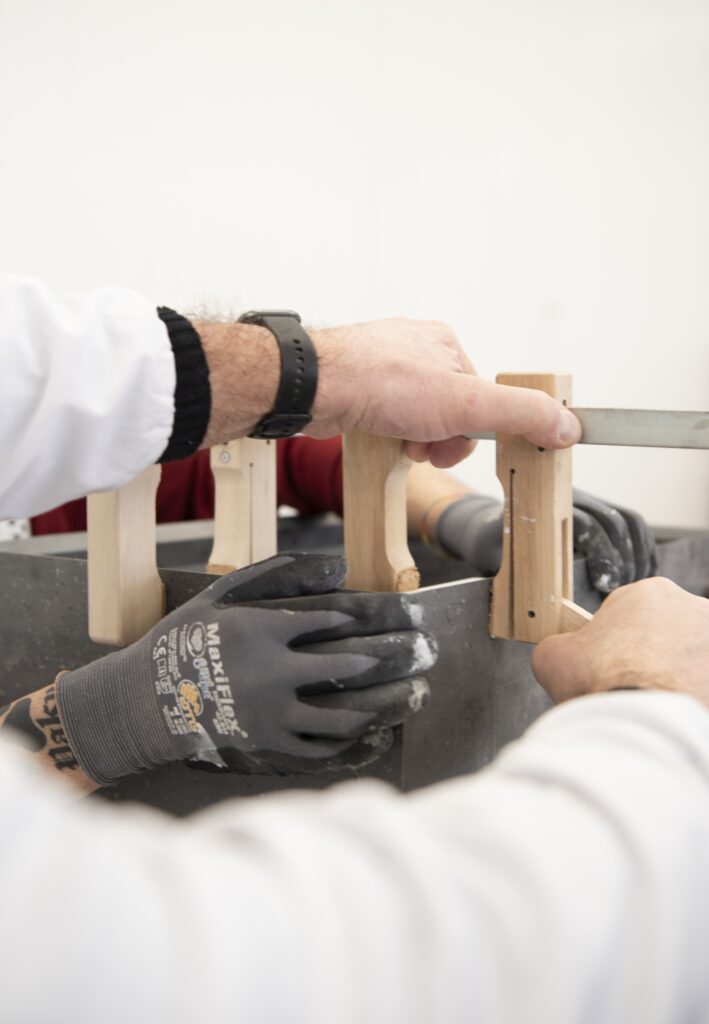
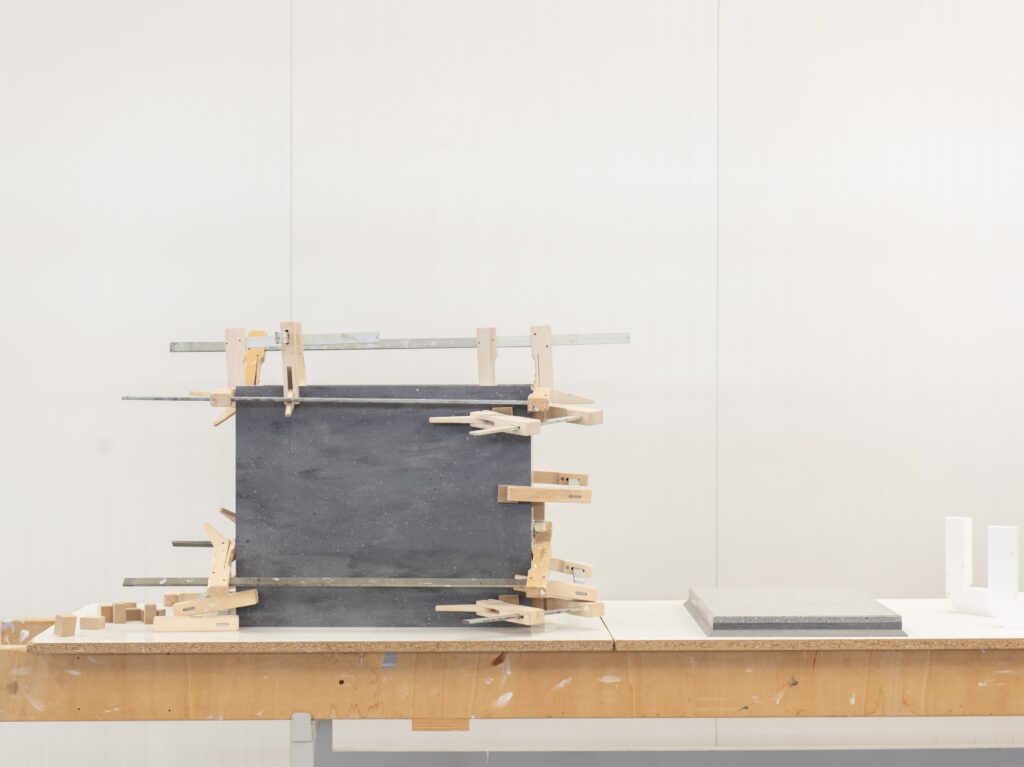
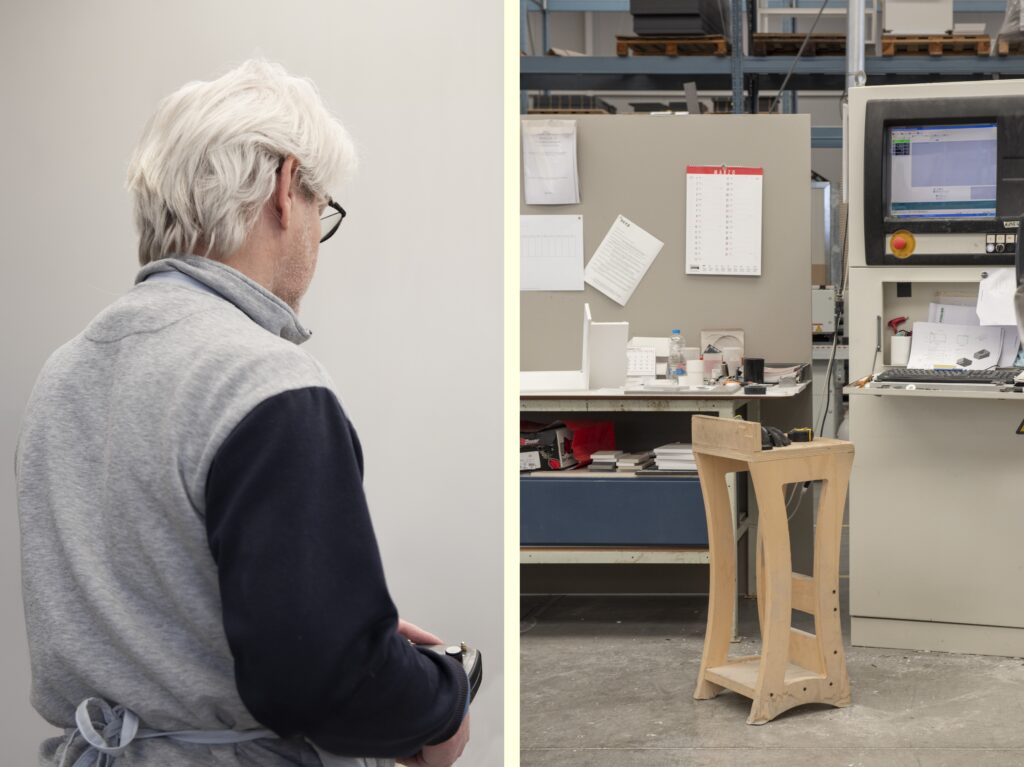
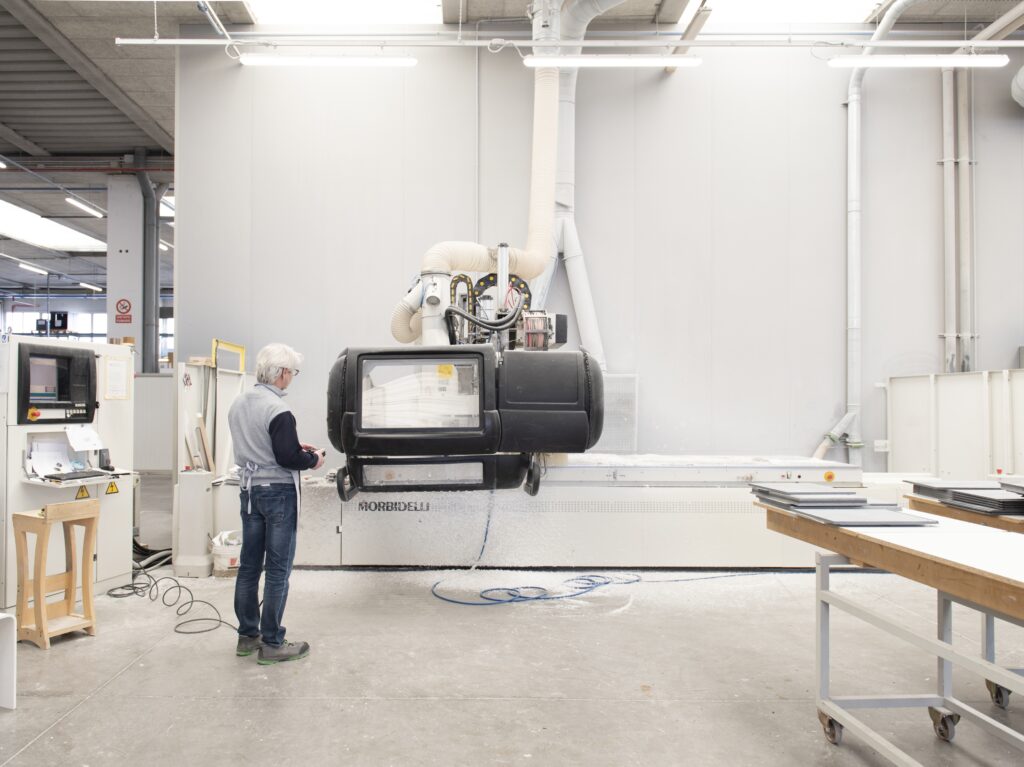
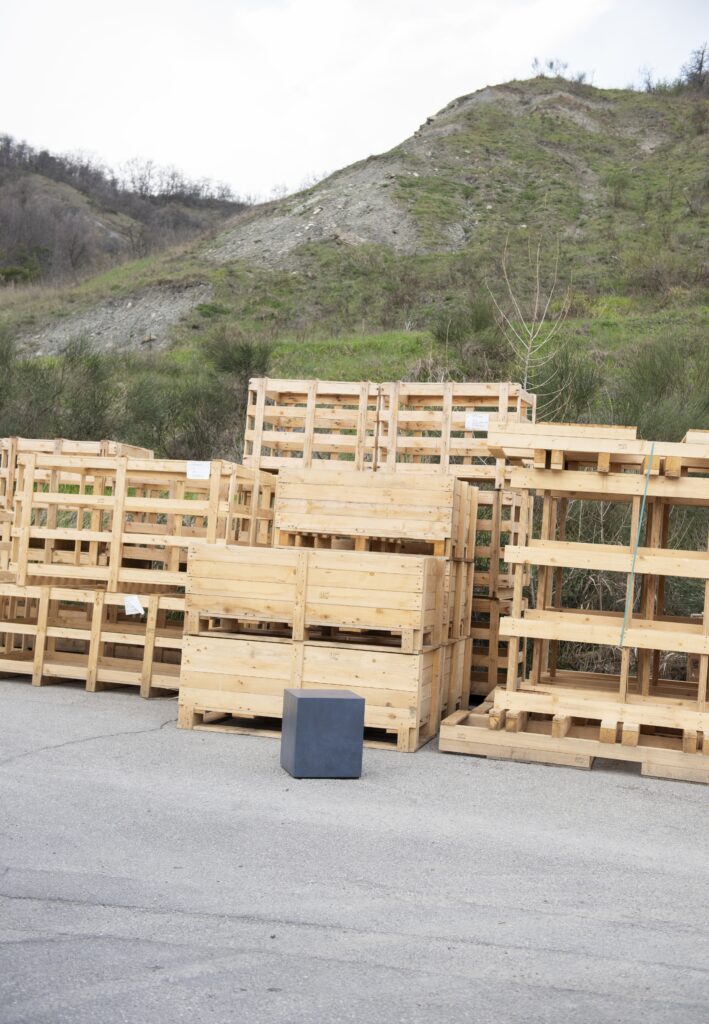
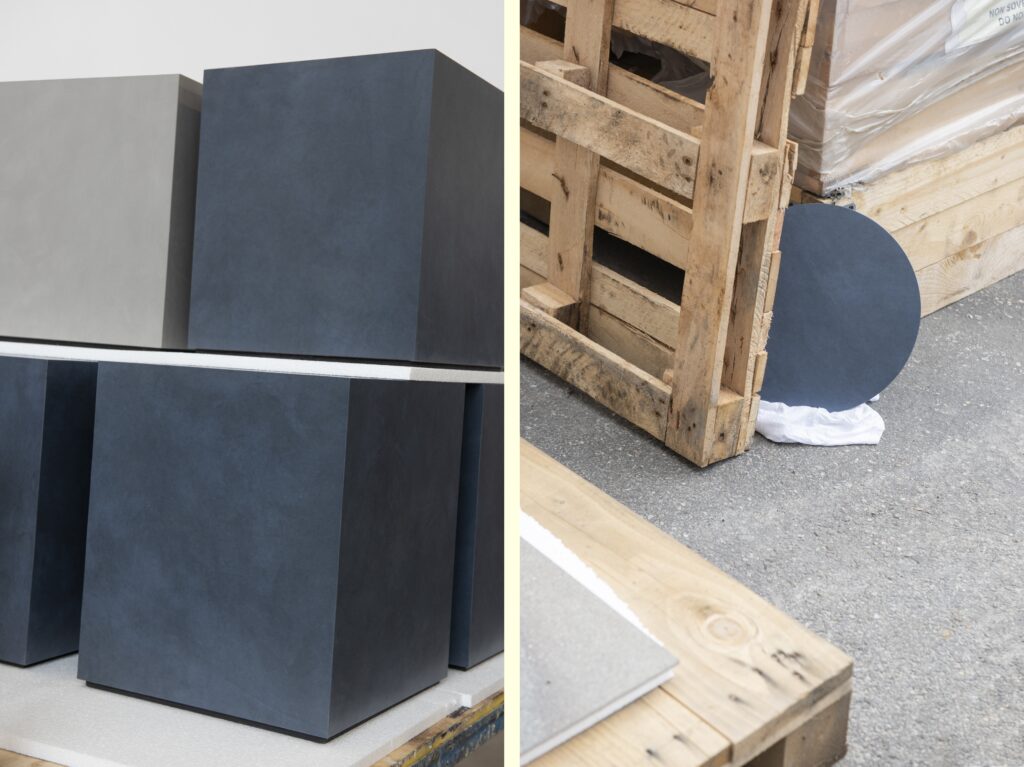
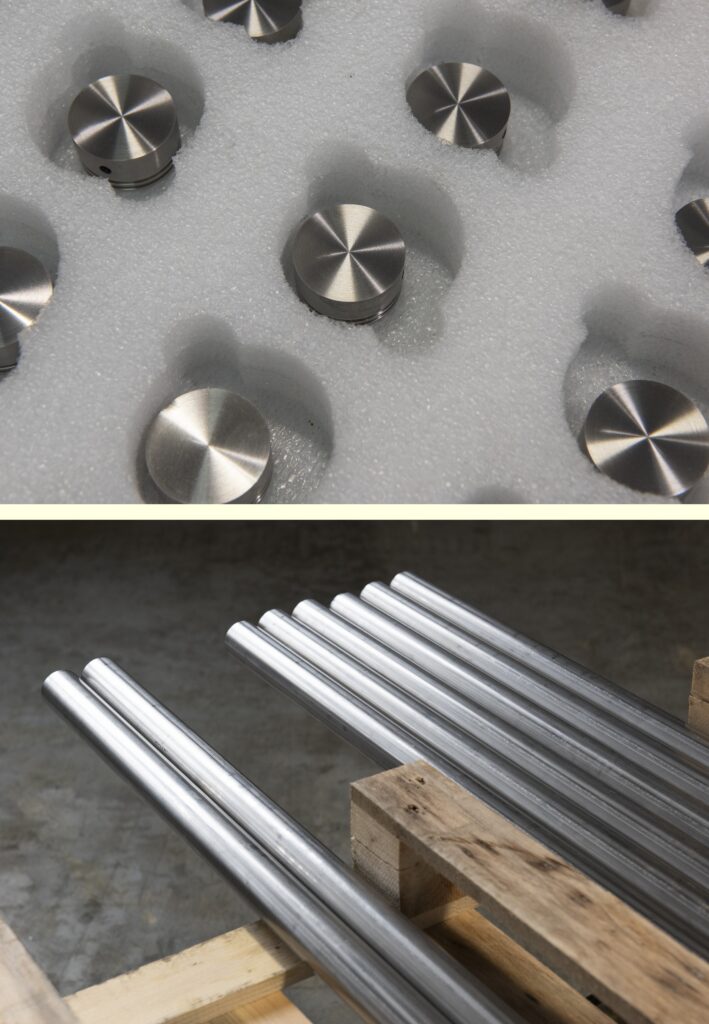
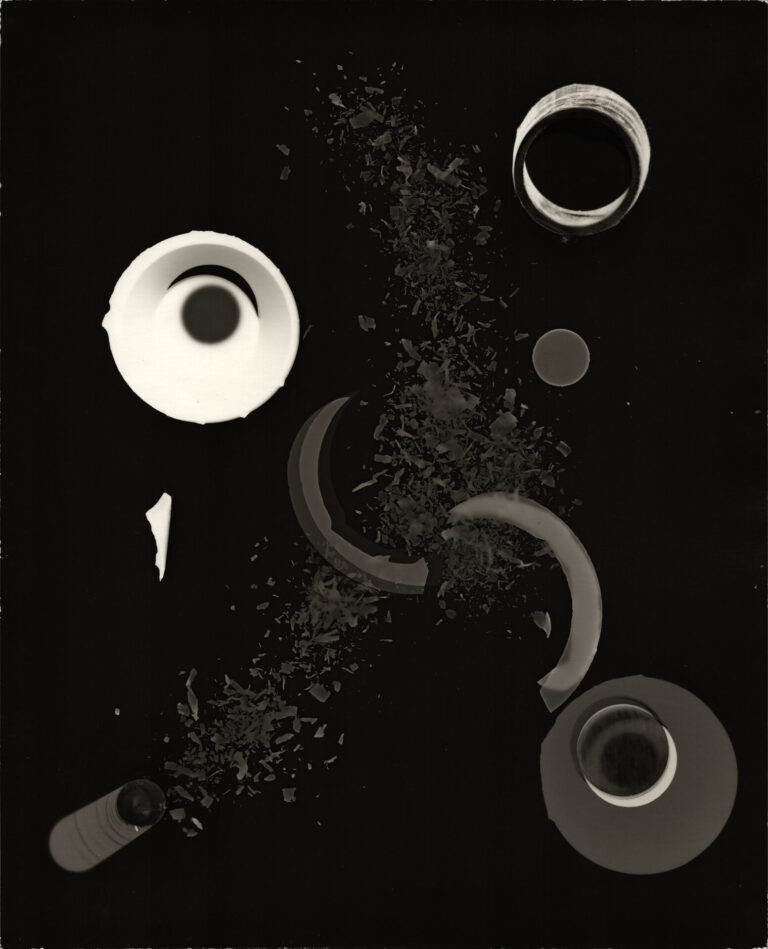
The research behind Panorami Urbani extends into the production environments of the participating brands. Through a photographic reportage by Jessica Soffiati, the manufacturing processes of Quadrodesign, Rexa, and Ceramiche Caesar are documented as spaces of precision, experimentation, and identity. Surfaces, textures, and gestures become part of a broader visual narrative that foregrounds the relationship between industrial expertise and design culture.
Rather than functioning as a temporary scenography, Panorami Urbani proposes a reflection on how urban furniture can mediate relationships between architecture and community. The installation reconsiders the public realm as a place of encounter—structured through essential forms, durable materials, and a shared spatial language rooted in the Milanese design tradition.